
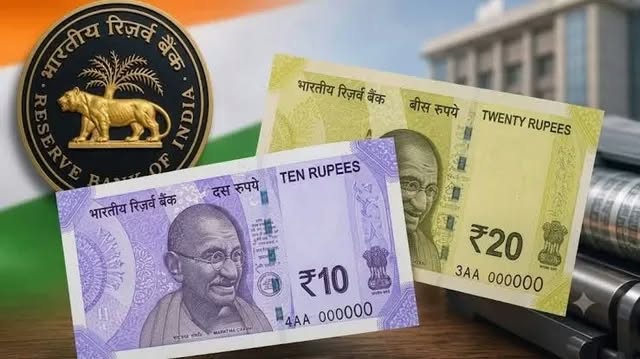
A Strategic Shift Toward Modern Banknote Technology
The Reserve Bank of India (RBI) is moving closer to modernizing the nation's paper-based currency system by taking concrete steps toward the field testing of polymer currency notes. Under the initial phase of this revived initiative, the central bank plans to conduct extensive field trials for small-denomination notes, specifically the 10-rupee and 20-rupee denominations. The movement signals a significant shift in India’s currency management strategy, aiming to test how synthetic banknotes perform under real-world economic conditions and diverse climatic factors across the country.
To operationalize the experiment, Bharatiya Reserve Bank Note Mudran Private Limited (BRBNMPL), a wholly owned subsidiary of the Reserve Bank of India responsible for printing currency, has begun reaching out to global and domestic market players. The subsidiary has officially invited proposals and expressions of interest from qualified suppliers capable of providing the specialized polymer substrate and associated raw materials required to produce these experimental notes.
The procurement effort marks the preliminary setup for a tightly controlled trial designed to assess whether polymer substrate can successfully replace conventional cotton-rag paper in everyday commercial transactions, particularly in high-circulation, low-value notes that experience rapid physical degradation.
Addressing the Challenge of Small-Denomination Longevity
The primary driver behind the push toward polymer notes is the inherent physical vulnerability of traditional paper currency in India. Small-denomination paper notes, such as the 10-rupee and 20-rupee bills, pass through millions of hands daily, circulating rapidly through local markets, public transportation, small retail vendors, and street commerce. Because of this high velocity of circulation, paper banknotes are frequently subjected to severe wear and tear, moisture, folding, soiling, and tearing.
As a consequence, the life expectancy of lower-value paper bills in India remains relatively short. The Reserve Bank of India is forced to regularly withdraw worn-out and damaged notes from circulation, destroying them and printing fresh currency to replenish the supply. This constant cycle of replacement imposes substantial operational burdens and financial costs related to raw paper procurement, printing ink, transportation, security, and disposal.
Polymer banknotes, manufactured from specialized plastic materials like biaxially oriented polypropylene, offer a potential solution to this persistent economic issue. Synthetic notes are inherently resistant to water, dirt, oil, and tearing. Experience from international central banks that have adopted polymer currency—such as Australia, Canada, the United Kingdom, and Vietnam—indicates that synthetic notes can last significantly longer than traditional paper currency under comparable handling conditions. By introducing plastic notes in the denominations that face the heaviest daily use, the central bank aims to substantially extend the lifespan of the bills, streamline note replacement cycles, and lower overall long-term currency management expenses.
Overcoming Past Technical Hurdles Through Advanced Innovation
This is not the first time the Reserve Bank of India has explored the feasibility of synthetic banknotes. Over a decade ago, in 2012, the central bank made initial plans to conduct field trials for 10-rupee plastic notes across five geographically diverse cities—Kochi, Mysore, Jaipur, Shimla, and Bhubaneswar—to test how polymer material would withstand India's extreme variations in temperature, humidity, and usage patterns.
However, that earlier initiative was unable to progress into a full-scale commercial rollout due to a series of technical and logistical challenges encountered at the time. Concerns regarding substrate sourcing, security feature integration, printing machinery adjustments, and environmental heat tolerance stalled the project, preventing the widespread adoption of plastic currency.
The decision to revisit the project today reflects the significant technological advancements achieved in currency production and materials science over the past decade. Modern polymer substrates now incorporate superior heat resistance, anti-counterfeiting security features, improved printability, and enhanced environmental durability compared to older iterations. With these technological refinements now available globally, central bank officials believe the timing is appropriate to re-evaluate the performance of plastic currency in the Indian context.
Looking Ahead to the Trial Phase
The current procurement process initiated by BRBNMPL serves as the foundational stage of what will be a closely monitored trial period. Once the necessary substrate materials are sourced and trial batches are printed, the experimental 10-rupee and 20-rupee plastic notes will be introduced into select geographic zones or controlled distribution channels.
Throughout the trial phase, monetary authorities will evaluate multiple critical metrics, including physical wear rates, soil resistance, public acceptance, machine readability in counting and sorting equipment, and overall resistance to counterfeiting. The outcome of these field trials will provide essential empirical data to determine whether polymer notes will eventually be scaled up to replace traditional paper currency on a broader national level.





Post Comments