
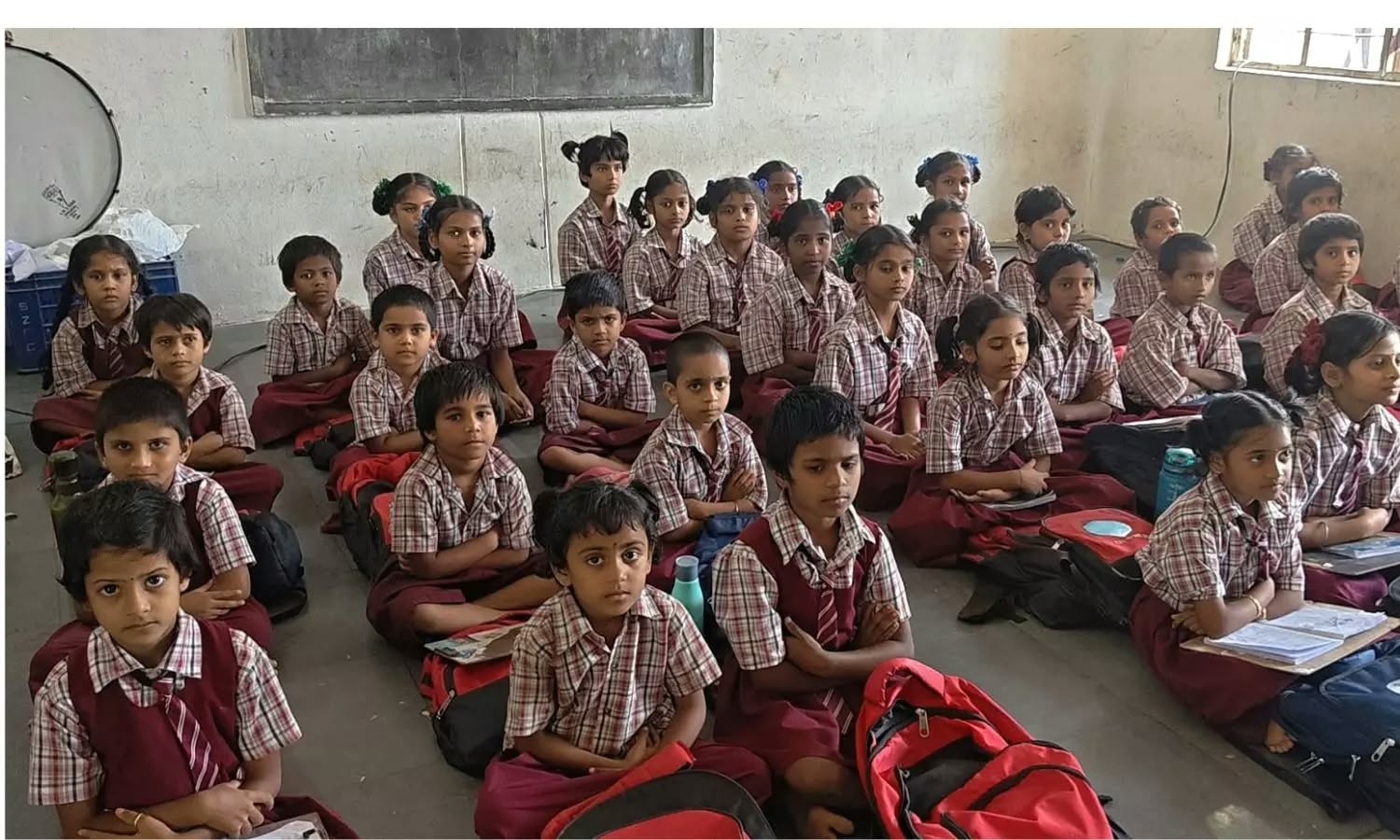
CRITICAL OVERCROWDING AND RESOURCE CONSTRAINTS IN PRIMARY EDUCATION
Educational standards across primary institutions in the combined district are facing growing operational challenges as a substantial portion of local schools continue to function with a single instructor on staff. Recent data indicates that out of 4,293 functional government schools operating across the combined district, 879 primary centers are managed entirely by solitary teachers. These educators are tasked with single-handedly conducting daily instruction across classes one through five, leading to widespread administrative and academic strain.
The concentration of single-teacher establishments is primarily governed by specific administrative guidelines set forth in Government Order 25 (GO 25). Under these existing guidelines, primary campuses maintaining an enrollment threshold of 19 students or fewer are assigned only one Secondary Grade Teacher (SGT). Local teacher associations and educational staff have increasingly vocalized concerns that this policy severely limits effective instruction, creating an environment where a solitary instructor must divide time and attention across multiple primary grades simultaneously.
The Dynamics of GO 25 and Teacher Allocation Frameworks
The policy framework governing current staffing levels was officially instituted on August 12, 2021, through the release of GO 25. Promulgated by the state government to standardize school rationalization and streamline the redistribution of teaching resources, the order established a direct mathematical correlation between student strength and faculty headcount in primary institutions.
According to the explicit mandates of GO 25, primary schools are staffed under a strictly tiered structure based on total enrollment:
0 to 19 Students: Sanctioned for exactly one SGT teacher.
20 to 60 Students: Allocated two SGT teachers.
61 to 90 Students: Designated three SGT teachers.
91 to 120 Students: Granted four SGT teachers.
Under this calculated progression, higher student enrollment levels trigger additional teacher postings. However, for facilities falling into the baseline tier of 19 or fewer pupils, the policy caps the faculty size at a single instructor. As a result, one individual must manage all primary levels—from foundational first-grade basics to fifth-grade curriculum—within the same facility every day.
Operational Challenges in Multi-Grade Classrooms
Teaching multiple age groups simultaneously presents intricate instructional hurdles for educators deployed in these 879 institutions. Managing five distinct grade levels within a single school environment requires instructors to split lesson plans, balance varying curriculum demands, and maintain discipline among children with wide age gaps. When administrative duties, attendance tracking, and state-mandated reporting requirements are added to daily responsibilities, the effective time devoted to active subject teaching is often compressed.
"Handling five distinct classes in a single physical or temporal setup creates immense pressure on the teaching staff," noted representatives from local teacher unions. They pointed out that while single-teacher allocations may appear efficient on administrative balance sheets, the practical reality inside classrooms leads to fragmented lesson delivery and compromised learner outcomes.
Furthermore, if a single teacher must take personal leave, attend official training programs, or fulfill administrative obligations outside the campus, the entire school facility struggles to maintain routine operations. Parents and community members have expressed concern over the long-term impact on foundational literacy and numeracy for children enrolled in these early-stage learning environments.
Demands for Policy Revision and Classroom Reforms
In light of these continuous operational challenges, various teacher associations across the region have formally petitioned educational authorities to review and amend the provisions of GO 25. Educators argue that student enrollment numbers alone should not be the sole metric used to decide faculty allocation in primary schools.
The primary demand submitted by teaching organizations centers on establishing a baseline staffing model that assigns at least one teacher per grade level, regardless of whether a class meets the numerical threshold of 19 students. By ensuring individual classroom coverage, educators maintain that schools can transition away from forced multi-grade instruction and offer structured, age-appropriate learning environments.
As discussions surrounding primary educational infrastructure continue, school staff and regional representatives await official action on GO 25. Educational advocacy groups emphasize that revising teacher rationalization criteria is essential to ensuring equitable learning opportunities for students attending public primary institutions throughout the district.







Post Comments