
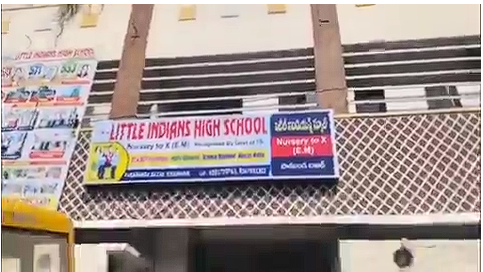
Tension gripped Little Indians School in the Pakabanda Bazar locality of Khammam after parents raised allegations of inappropriate behavior by a physical education teacher involving a sixth-grade student. News of the accusation quickly drew agitated family members and relatives to the campus, turning an ordinary school day into a scene of heated protest and property damage.
According to the accounts reported from the scene, parents alleged that the physical education teacher acted improperly toward a girl studying in the sixth standard at the school. Once word of the alleged incident reached the girl’s family, relatives arrived at the institution expressing deep distress and anger over what they described as a serious breach of trust involving a young student.
Anger Erupts at the Campus
As parents and relatives gathered at the school premises in Pakabanda Bazar, frustration boiled over into open agitation. During the course of the protest, furniture inside the school was damaged, underscoring the intense emotion surrounding the allegation and the disruption felt across the institution.
For families sending their children to school every morning, an accusation of this nature strikes at the core of everyday expectations regarding care, discipline, and protection. The gathering at Little Indians School reflected how swiftly a reported grievance involving a child can rally relatives and heighten local tension around an educational institution.
Concerns Over Safety Where Children Learn
Parents voiced strong resentment that such an allegation would emerge from a setting meant for learning and personal development. Schools are widely regarded by families as spaces where children receive instruction, guidance, and structured supervision throughout the day, making any report of misconduct by staff a matter of acute concern.
In neighborhoods like Pakabanda Bazar within Khammam, local schools serve as daily hubs for students and working families alike. When allegations surface involving a teacher—especially someone responsible for physical activities where students interact closely during games and drills—parents often feel an immediate sense of alarm and demand accountability.
A Local Flashpoint in Khammam
The episode at Little Indians School highlights the volatile atmosphere that can develop when serious allegations involving a minor become known to families in real time. Relatives arriving together in anger transformed a localized grievance into a visible confrontation on campus, resulting in broken furniture alongside sharp expressions of outrage.
While the available report centers on the parents’ allegation, the arrival of relatives, the ensuing agitation, and the damage to school furniture, the immediate impact was clear: heightened tension at the school and deep unease among parents questioning how student well-being is safeguarded in places meant to educate and guide young minds.
Whether viewed through the lens of parental anxiety or institutional accountability, the events in Khammam underscore how sensitive issues involving students can rapidly disrupt school operations and test community trust. For families watching closely, the central expectation remains straightforward: schools must be environments where children can study and grow safely without fear or cause for alarm.





Post Comments