
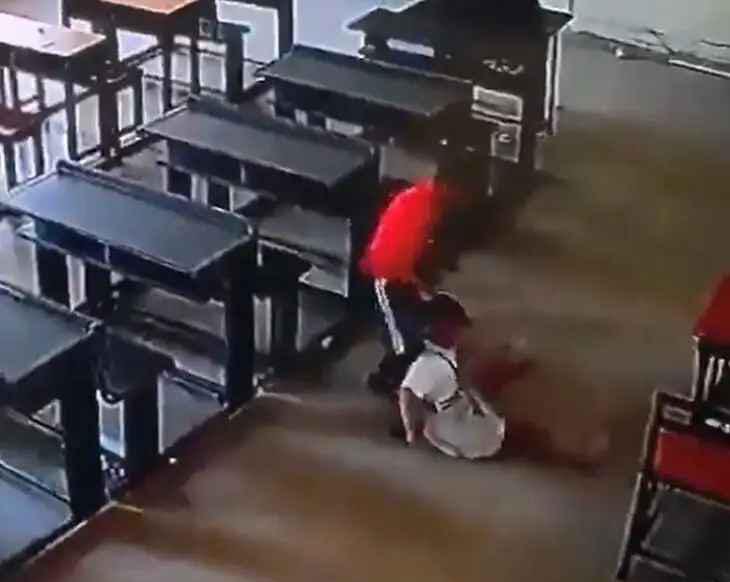
In a pivotal legal development regarding a distressing incident that sparked nationwide concern over child safety within educational institutions, a Juvenile Justice Board in Haryana has granted bail to an eight-year-old boy accused of assaulting a six-year-old classmate. The board also issued strict directives to administrative and cyber authorities to immediately eliminate all CCTV footage and associated videos of the violent encounter circulating across social media platforms.
The underlying incident took place on October 28 inside a classroom at a government primary school situated in Sector-20, Panchkula. According to verified details, the six-year-old female student suffered severe injuries after being repeatedly struck with a brick by the eight-year-old male student. The violence left the young girl unconscious on the school premises, prompting immediate emergency intervention.
Initial medical care was administered at a local healthcare facility in Panchkula. However, given the gravity of her physical trauma, medical personnel swiftly transferred the child to the Postgraduate Institute of Medical Education and Research (PGIMER) in Chandigarh for specialized treatment. Following days of intensive medical oversight and noticeable physical recovery, hospital authorities official discharged the six-year-old victim on November 4.
Considerations Behind the Bail Decision
The decision by the Juvenile Justice Board to grant bail followed a formal petition submitted by the boy's parents, who argued that prolonged detention or custody would severely impair the child’s psychological well-being, educational progress, and long-term developmental prospects. The defense emphasized that continuous isolation in an institutional facility could cause irreversible harm to an eight-year-old child.
In their submission to the board, the parents provided explicit undertakings that the juvenile would be enrolled in mandatory professional counseling sessions to address behavioral concerns. Furthermore, they committed to ensuring his full compliance with all future proceedings, pledging to present the boy before the board whenever officially summoned. Taking these legal commitments, parental guarantees, and the child's tender age into account, the board sanctioned his release on bail.
Mandates on Social Media Content and Privacy Directives
In parallel with the bail determination, the Juvenile Justice Board expressed acute concern over the widespread dissemination of CCTV footage capturing the attack across digital platforms. Highlighting statutory protections regarding the privacy and identity safeguard of minors under Indian jurisprudence, the panel observed that public circulation of such graphic visual material poses serious long-term societal and psychological risks to both children involved.
Consequently, the board issued explicit orders directing administrative and law enforcement agencies to ensure the immediate deletion and removal of all photographs, surveillance clips, and related identification details from social media networks. To guarantee strict compliance with these instructions, the board commanded authorities to submit a comprehensive execution report detailing the status of content removal by November 27.
Administrative Action and Suspensions Following Safety Failure
The violent breakdown within the classroom has drawn critical scrutiny toward the school administration regarding systemic lapses in monitoring and institutional security. Moving swiftly to enforce accountability, educational authorities ordered the immediate suspension of three staff members: the school headmistress, the designated class teacher responsible for monitoring the room when the assault transpired, and the campus security watchman.
Simultaneously, local police forces registered formal legal cases against the headmistress, the class teacher, and the security personnel to investigate potential negligence of duty and failure to maintain a safe environment for students. To establish a thorough account of the circumstances that permitted a child to access a heavy brick inside or near a classroom unsupervised, the Haryana state government constituted a dedicated special inquiry committee. The panel is tasked with auditing safety protocols across the institution and identifying operational vulnerabilities.
Heightened Concerns Surrounding Child Protection in Schools
This unsettling occurrence in Panchkula has rekindled national discussions regarding child supervision, peer-to-peer behavioral abnormalities, and overall safety protocols within government and private educational settings alike. Child development experts and education advocates emphasize that early behavioral warning signs in young children must be identified proactively through attentive oversight rather than being allowed to escalate into violent behavior.
The case underscores the imperative for structured behavioral counseling, psychological support frameworks, and continuous supervisory vigilance across school campuses. Stakeholders emphasize that school managements, educators, and parents must maintain heightened alertness and coordinated communication to establish secure environments where children remain protected from institutional safety oversights and peer harm.



Post Comments