
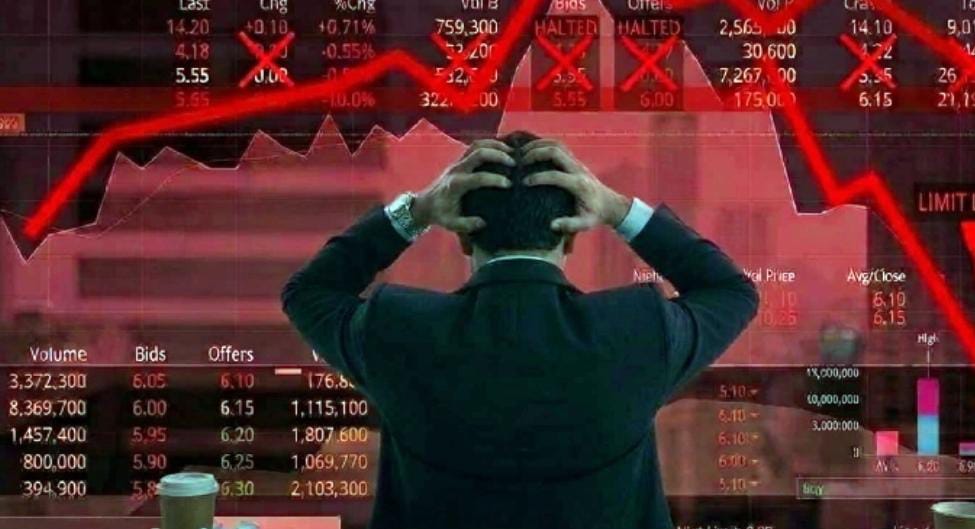
Widespread Selling Pressure Grips Dalal Street
Trading floors across India witnessed intense volatility and relentless liquidations on Thursday, as benchmark indices tumbled sharply under a wave of heavy selling pressure. The sell-off, which started early in the morning session, accelerated rapidly throughout the trading day, leaving retail and institutional investors alike reeling from sudden market instability. Both the BSE Sensex and the NSE Nifty 50 surrendered critical support levels in quick succession, reflecting widespread anxiety across domestic equity markets.
Initial trading reports pointed to an early drop exceeding 800 points on the Sensex, but as institutional liquidations gathered momentum, the slide worsened dramatically. Updated market data confirmed that the BSE Sensex plunged by more than 1,000 points during the session, while the broader NSE Nifty benchmark breached its psychological support boundary to trade comfortably below the 22,300 level.
Global Factors and Capital Outflows Drive Market Downslide
Financial analysts and market experts attribute this steep contraction to a combination of persistent foreign capital outflows and worsening global macroeconomic conditions. Sustained selling by Foreign Institutional Investors (FIIs) has been a primary catalyst behind the prolonged correction. Foreign capital continues to migrate toward competing markets and alternative asset classes offering safer dynamic yields, leaving domestic equities vulnerable to sudden supply shocks.
Adding fuel to the domestic downturn is the recent surge in United States Treasury bond yields. Rising U.S. yields have historically drawn foreign capital away from emerging equity markets, as investors seek guaranteed higher returns in standard fixed-income securities overseas. Compounding these structural pressures is the ongoing weakening of the Indian Rupee against the U.S. Dollar alongside high volatility in global crude oil prices, which directly threatens India's fiscal stability and corporate earnings prospects.
Auto Stocks Bear the Brunt of Heavy Profit-Booking
While downturns often affect specific pockets of the market unevenly, Thursday's bloodbath was notable for its broad-based distribution across nearly all key market segments. Automobile equities faced particularly severe headwinds, emerging as one of the hardest-hit sectors of the day. Major auto components and vehicle manufacturers witnessed sharp valuation declines as institutional desks aggressively trimmed exposure amid rising input cost concerns and broader demand uncertainty.
The sharp decline in the auto basket served as a major drag on the broader benchmarks, amplifying overall index losses. Beyond auto equities, banking, financial services, and energy shares also registered notable losses, indicating that profit-booking was not confined to isolated pockets but was instead part of an overarching risk-off approach adopted by institutional traders.
Investors Lose ₹9 Lakh Crore in Single-Day Wealth Destruction
The sustained downward trajectory over consecutive trading sessions has significantly heightened fear and uncertainty among market participants. The monetary impact of Thursday's rout was both immediate and severe. According to exchange reports, the overall market capitalization of BSE-listed companies contracted dramatically, erasing approximately ₹9 lakh crore in investor wealth over the course of a single business day.
This massive destruction of portfolio capital has deeply impacted market sentiment, particularly among retail investors who had built significant long positions during previous bullish phases. Market capitalization, which reflects the total market value of all listed firms, experienced one of its sharpest single-day contractions in recent memory, underscoring the severity of the current market adjustment.
Caution Prevails as Traders Watch Key Benchmark Levels
As adverse macroeconomic conditions continue to overshadow trading sentiment, market participants are adopting an extremely cautious stance regarding the near-term directional movement of both the Sensex and the Nifty. Technical analysts suggest that until foreign institutional selling slows down and global macroeconomic indicators stabilize, domestic equities may remain susceptible to ongoing volatility and corrective pressure.
Market strategists advise investors to remain vigilant and avoid making aggressive directional bets while indices hover around sensitive technical levels. Attention now turns to upcoming domestic macroeconomic data, international currency movements, and central bank commentary for indications of whether the market will find stable support or face further structural revaluation in the upcoming trading sessions.







Post Comments