
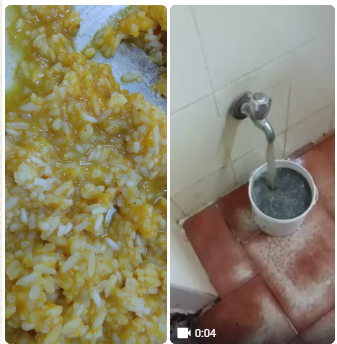
Fresh troubles have surfaced at the Rajiv Gandhi University of Knowledge Technologies (RGUKT), widely known as Basara IIIT, located in the Nirmal district of Telangana. The premier institute finds itself at the center of intense criticism following mounting grievances from residential students regarding contaminated water supply and compromised food standards in campus dining halls.
Female students residing in the Ganga and Yamuna hostel blocks have been among the most severely impacted. Residents report that murky, dirty water has been flowing through dormitory taps for several days, rendering it completely unfit for personal hygiene or general use. Numerous students have complained of developing skin allergies, rashes, and infections after being forced to use the contaminated supply.
Persistent Infrastructure Strain and Earlier Disturbances
The current breakdown in basic amenities follows a period of heightened operational strain at the institution, which currently houses students across Pre-University Course 1 (PUC-1), Pre-University Course 2 (PUC-2), and final-year engineering programs.
The campus had previously weathered a severe water shortage driven by regional El Niño weather patterns. In response to the earlier crisis, university administration had initially declared Dussehra holidays ahead of schedule and signaled plans to transition to online learning modules. However, following strong student preferences for in-person instruction, district authorities intervened to restore on-campus operations.
District Collector Bhavesh Mishra initiated measures to pump water directly from the nearby Godavari River, sanctioning a dedicated fund of ₹8 lakh to install high-capacity motor pumps. Based on these interim arrangements, physical classes were officially resumed, bringing thousands of students back to the residential campus.
Unsanitary Mess Food and Growing Health Alarms
Despite the resumption of physical coursework, resident conditions have deteriorated rapidly. Beyond the tap water issues in the living quarters, students have raised serious complaints regarding the hygiene and quality of food served in campus mess facilities.
Reports have emerged of insects being discovered inside meals served to students. The issue has fueled further anxiety on campus, as several residents suspect that untreated or contaminated water is being utilized in the mess kitchens for cooking and cleaning utensils.
"The water coming out of the taps in our hostels is so discolored and foul that we cannot even use it to wash our hands, let alone bathe," voiced a resident student during ongoing protests on campus.
On Monday, groups of students formally brought these living conditions to the attention of university administrators, demanding immediate remediation of both the water filtration systems and the dining facilities. Parents and local student organizations have joined the outcry, criticizing the administration for failing to maintain foundational infrastructure at a public university of national repute.
Official Water Testing and Demand for Broader Investigation
In response to the protests, local authorities dispatched officials to inspect the affected residential blocks and collect liquid samples for laboratory testing.
District Educational Officer (DEO) Rajeshwar confirmed that multiple samples were drawn from the campus supply lines and sent for immediate chemical and microbiological analysis. Authorities indicated that official lab reports are expected to be returned shortly, after which formal corrective action will be decided based on the findings. Medical confirmation remains pending to definitively link the reported skin conditions to specific waterborne contaminants.
However, parents and student bodies assert that routine sample testing alone is insufficient to resolve the systemic issues plaguing the institute. They are demanding a comprehensive audit of all campus infrastructure, including thorough inspections of water storage overhead tanks, underground pipelines, and filtration units. Furthermore, representatives have requested that water samples also be drawn from administrative and guest house lines to ensure transparent, comparative evaluation, with all lab results made public.
Parents have urged state officials to form a high-level independent inquiry committee to determine administrative accountability and penalize negligent personnel. Calls have also grown for structured student platforms—similar to the 'Chatron Ki Goonj' voice initiative—to ensure student grievances regarding residential amenities are systematically logged and resolved without administrative delay.


Post Comments