
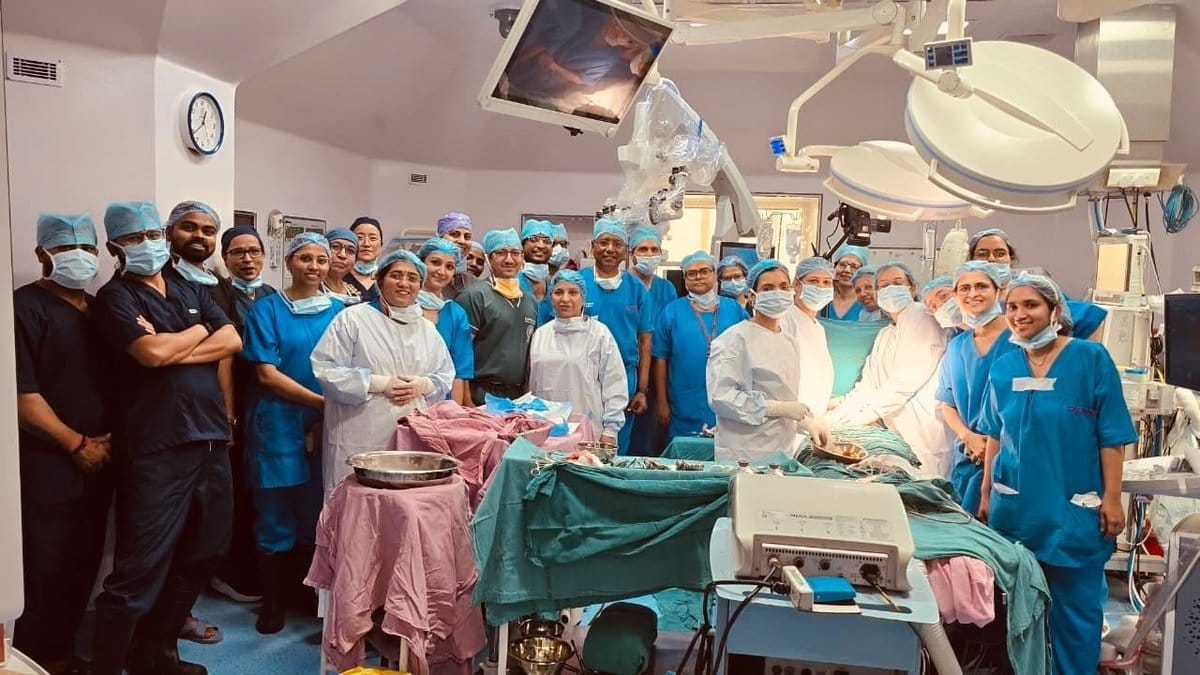
NEW DELHI, November 14 — India has reached a defining milestone in advanced maternal and pediatric medicine. Physicians at the All India Institute of Medical Sciences (AIIMS) in New Delhi have successfully executed the country’s first-ever open fetal surgery, repairing a severe spinal defect in a 25-week-old fetus while it remained inside the mother’s womb.
The intricate operation took place on Thursday at the Neurosciences Centre of AIIMS Delhi and lasted for more than six hours. Hospital authorities formally disclosed the details of this landmark medical achievement on Saturday, noting that the complex intervention was provided entirely free of charge under the central government’s Janani Shishu Suraksha Karyakram (JSSK) scheme.
A Collaborative Effort Across Specialties
Executing a surgical procedure on an unborn patient requires extraordinary coordination across multiple clinical disciplines. More than 30 doctors, nurses, and support specialists participated in the marathon operation, bringing together expertise from obstetrics, gynecology, neurosurgery, anesthesiology, plastic surgery, radiodiagnosis, and neonatology.
The surgical team was led by Dr. Deepak Gupta from the Department of Neurosurgery, working closely alongside senior obstetric specialists Dr. Neena Malhotra and Dr. K. Aparna Sharma. Throughout the six-hour duration, the team carefully managed the physiological stability of both the mother and the 25-week-old fetus to ensure the delicate spinal tissue could be safely repaired without triggering premature delivery.
According to official statements released by AIIMS, this clinical success represents the culmination of a 14-year institutional effort. Specialists at the premier medical institute began laying the groundwork to develop indigenous capabilities for intrauterine fetal spinal surgeries more than a decade ago, steadily building the infrastructure and interdisciplinary protocols required to bring that vision into reality.
Understanding the Congenital Condition
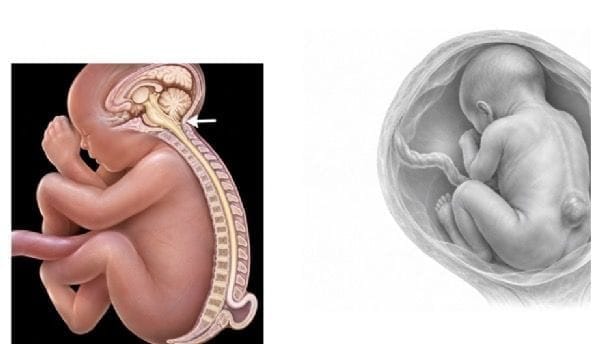
Before the intervention, diagnostic evaluations revealed that the 25-week-old fetus was affected by lumbosacral myelomeningocele. This serious congenital neurological condition occurs when the spinal canal and backbone do not close properly before birth, leaving spinal tissue and nerves exposed.
Dr. Deepak Gupta explained the long-term clinical risks associated with leaving the condition untreated until after delivery. Children born with lumbosacral myelomeningocele face a high likelihood of developing severe complications, including lower-limb paralysis, hydrocephalus—an abnormal accumulation of fluid within the brain—and a range of other lifelong neurological disabilities.
By intervening during the fetal stage and surgically closing and repairing the tissue surrounding the spine inside the womb, doctors can significantly reduce the risk of progressive nerve damage. Early prenatal correction offers a substantially better neurological outlook and lowers the chances of severe physical impairment after the baby is born.
Five Weeks of Rigorous Preparation and Simulation
Given that an open fetal procedure of this nature had never before been attempted in India, the medical team dedicated more than five weeks to exhaustive preoperative planning. Specialists across the participating departments conducted continuous clinical assessments of the fetus and utilized advanced medical imaging techniques to map the exact anatomical structure of the spinal defect.
To minimize unforeseen complications in the operating room, the multidisciplinary team also carried out a full-scale operative simulation prior to Thursday’s actual procedure. This rehearsal allowed surgeons, anesthesiologists, and nursing staff to refine every stage of the workflow, synchronize instrument handling, and establish contingency protocols under close expert supervision.
Following the successful completion of the six-hour surgery, hospital officials confirmed that the milestone demonstrates the capability of India's public healthcare system to deliver highly specialized, high-risk prenatal interventions. Delivered at zero cost to the family through the Janani Shishu Suraksha Karyakram initiative, the procedure marks a major step forward in accessible fetal medicine in the country.






Post Comments