
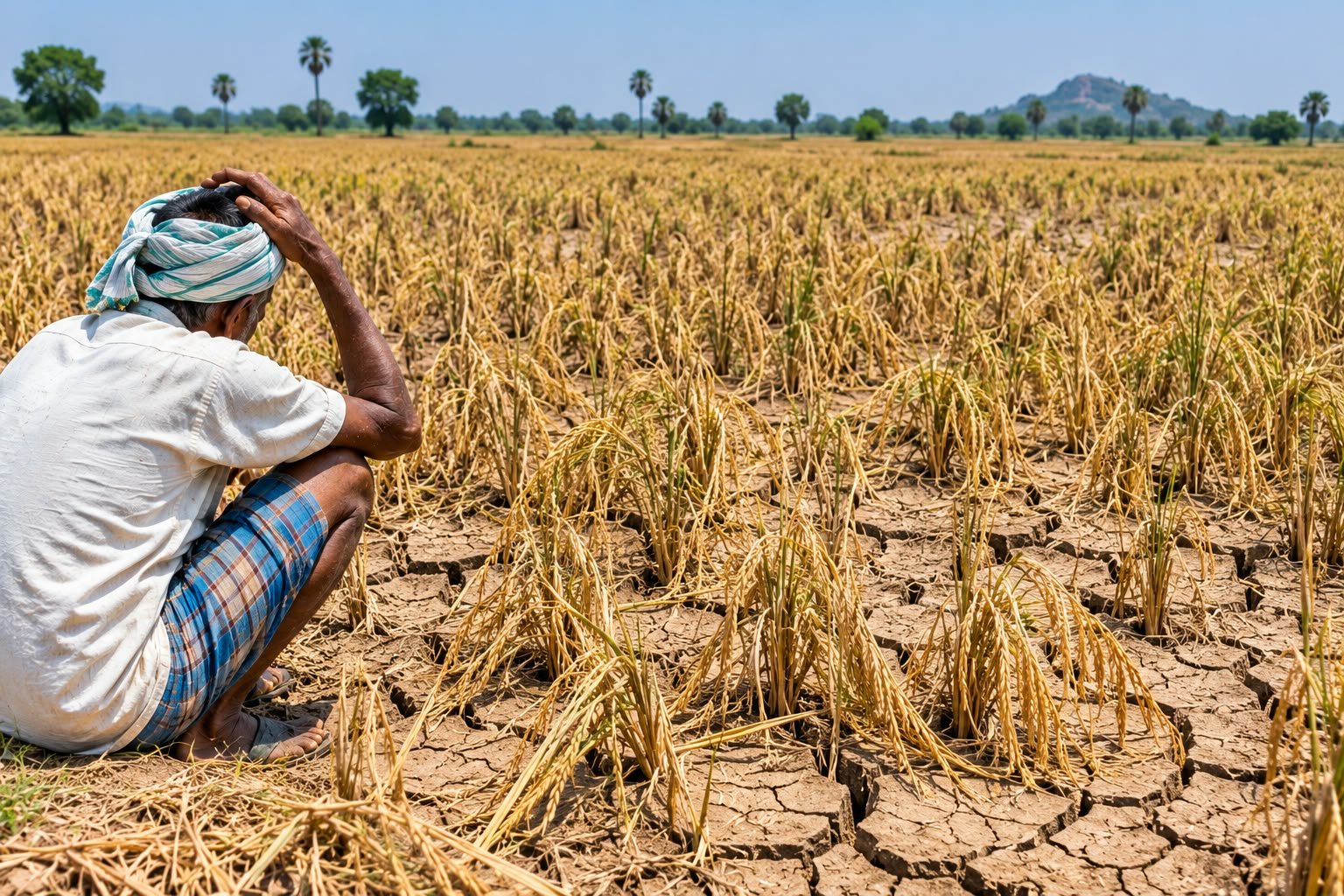
Severe Drought Conditions Push Agricultural Sector into Deep Financial Strain
Telangana's agrarian economy is staring at a massive crisis this agricultural cycle, with estimates indicating potential Kharif crop losses reaching ₹20,000 crore. The severe financial setback is primarily driven by an unyielding rainfall deficit across the region, which has left vast tracts of farmland uncultivated and severely damaged standing crops reliant on seasonal monsoons.
The alarming projections stem from a comprehensive assessment conducted by Professor Jayashankar Telangana State Agricultural University. According to the university’s findings, the ongoing dry spell has triggered a sharp 25 per cent contraction in total cultivated acreage, alongside extensive damage to crops that were already planted. Unfavorable weather conditions and inadequate soil moisture have left significant farm holdings idle, compounding the financial strain on the state's rural economy.
Cotton Farmers Bear the Brunt of Unfavorable Weather Patterns
Among the various agricultural commodities produced in the state, cotton has taken the hardest hit. Telangana's extensive agricultural landscape is heavily dedicated to cotton production, making the cash crop exceptionally vulnerable to erratic weather patterns and prolonged dry spells.
Speaking on the evaluation, Vice-Chancellor Aldas Janaiah highlighted the disproportionate impact on cotton cultivators. Because the region relies heavily on cotton farming, the failure of timely rainfall has devastated expected yields, leaving growers vulnerable to staggering capital losses as harvest expectations continue to drop.
Looming Rabi Shrinkage Signals Prolonged Agricultural Distress
The repercussions of the moisture deficit are not expected to end with the current Kharif harvest. The university's study warns that the upcoming Rabi cropping season could face severe disruptions if monsoon performance does not rapidly improve. Dependent largely on the northeast monsoon beginning in October, Rabi sowing activities may contract dramatically.
In a normal agricultural cycle, Rabi cultivation spans roughly 1.3 crore acres across Telangana. However, experts predict that the lack of water reserves could shrink the cultivated area down to just 70 lakh acres. Rice production, a crucial staple for the state, is projected to take a massive blow. Under standard conditions, paddy covers nearly 60 lakh acres during the Rabi period; current forecasts suggest that paddy acreage will plummet by at least 40 per cent due to restricted irrigation capabilities.
Government Interventions and Strategic Water Management Efforts
Recognizing the severity of the growing crisis, the state administration led proactive measures to mitigate the damage. Telangana Chief Secretary Sanjay Jaju convened a series of 12 critical review meetings to address the severe challenges presented by the El Niño weather pattern.
During these high-level discussions, administrative directives were issued instructing agricultural officers and field personnel to closely work with farming communities. Officials were tasked with guiding farmers toward alternative, short-duration crops that require substantially lower water inputs, seeking to reduce overall systemic risk as climatic uncertainties persist.
Agricultural Experts Advise Cautious Loss-Minimization Strategies
In light of the prevailing drought conditions, experts at Professor Jayashankar Telangana State Agricultural University are urging agricultural workers to pivot from yield maximization to a strictly cautious, loss-minimization strategy. Farmers are strongly advised against undertaking unscheduled sowing operations without confirmed, long-term access to adequate irrigation sources.
Advisory guidelines issued by the institution emphasize that landholders must thoroughly assess available groundwater levels and existing soil moisture before investing heavily in seeds, fertilizers, and other farm inputs. Taking on the expense of cultivating water-demanding crops amidst severe rainfall deficits poses an extreme financial hazard, threatening to burden growers with high input expenses and virtually no harvest return.






Post Comments